

Simcoe, the hub of Norfolk County, is a community defined by a unique architectural duality. On one hand, we have the rich heritage of Victorian brick homes and sprawling rural farmhouses that speak to the region’s agricultural roots. On the other, there is a surge of modern development, bringing contemporary subdivisions and sleek renovations to the forefront. In this landscape, the fireplace remains the undisputed heart of the home, but the design choice—Modern vs. Rustic—is more than just a matter of taste. It is a decision that must bridge the gap between the property’s architectural bones and the homeowner’s lifestyle. This article guides Simcoe residents through the nuanced selection process, ensuring their new hearth not only warms their space but perfectly aligns with the visual language of their home.
Introduction
In the lexicon of interior design, few debates are as spirited as the clash between the Modern and the Rustic. For homeowners in Simcoe, this is not merely a theoretical exercise but a practical decision that dictates the atmosphere of their daily lives. The rustic fireplace evokes memories of Norfolk County winters, apple cider, and the crackle of seasoned hardwood in a rough-hewn stone hearth. It is the embodiment of comfort, tradition, and a connection to the land. Conversely, the modern fireplace represents the new wave of design: linear flames, cool-touch glass, and seamless integration into smart-home ecosystems. It speaks to clarity, sophistication, and a clutter-free existence.
Choosing between these two distinct aesthetics requires navigating a maze of materials, fuel types, and structural considerations. A sleek, linear gas fireplace might feel alien in a heritage home on Norfolk Street, just as a massive river-rock masonry heater might overwhelm a contemporary bungalow in a new subdivision. However, the lines are blurring, and the “Transitional” style is emerging as a strong contender. This comprehensive guide explores ten critical factors to help you find the perfect flame for your Simcoe home, ensuring that whether you choose the rugged charm of the past or the polished allure of the future, your fireplace remains the glowing soul of your living space.
1. Architectural Integrity and Home Era
The most critical starting point in your decision is the existing “bones” of your house. A fireplace should feel like it has always belonged there, not like an afterthought dropped in from a different century. In Simcoe, where housing stock ranges from the mid-1800s to 2024 new builds, respecting the architecture is key to a cohesive design.
- Victorian and Edwardian Homes: High ceilings and intricate moldings generally call for the verticality and weight of a rustic or traditional mantel and hearth.
- Original Features: Look for cues in existing baseboards and window trims to match your mantel profile.
- Masonry Dominance: Historic homes often rely on brick or stone; mirroring this maintains structural honesty.
- Proportion Control: Older rooms are often segmented; a rustic unit fits these smaller, defined spaces better than a sprawling linear one.
- Restoration Potential: Sometimes the “right” rustic fireplace is a restored original rather than a new install.
- Hearth Depth: Traditional designs usually feature a deep hearth extension, taking up floor space but adding authenticity.
- Vertical Emphasis: Rustic designs often draw the eye up, complementing the 9 or 10-foot ceilings found in older Simcoe homes.
- Material Harmony: Aged brick or reclaimed wood beams naturally sit well against plaster walls and hardwood floors.
- Mid-Century and Modern Builds: Lower ceilings and open floor plans benefit from the horizontal lines of modern fireplaces.
- Linear Focus: Modern units emphasize width over height, visually expanding the room.
- Flush Finishes: The lack of a protruding hearth saves floor space, essential for efficient modern layouts.
- Material Contrast: Sleek glass or steel stands out beautifully against drywall or neutral paint colours.
- Window Alignment: Modern fireplaces can be positioned to complement, rather than compete with, large picture windows.
- Minimalist Venting: Direct vent technologies allow for placement on walls where a traditional chimney would be impossible.
- Artistic Framing: The fireplace acts as a framed piece of art, often requiring no mantel at all.
- Integration: Can be built into cabinetry or media walls for a seamless look.
2. Material Palette: Texture vs. Sleekness
The tactile experience of the fireplace defines its category. Rustic embraces the imperfect, the textured, and the natural. Modern embraces the smooth, the uniform, and the industrial. Your choice of surround material will dictate the “temperature” of the room before the fire is even lit.
- The Rustic Palette: Focuses on raw, organic materials that bring the outdoors inside.
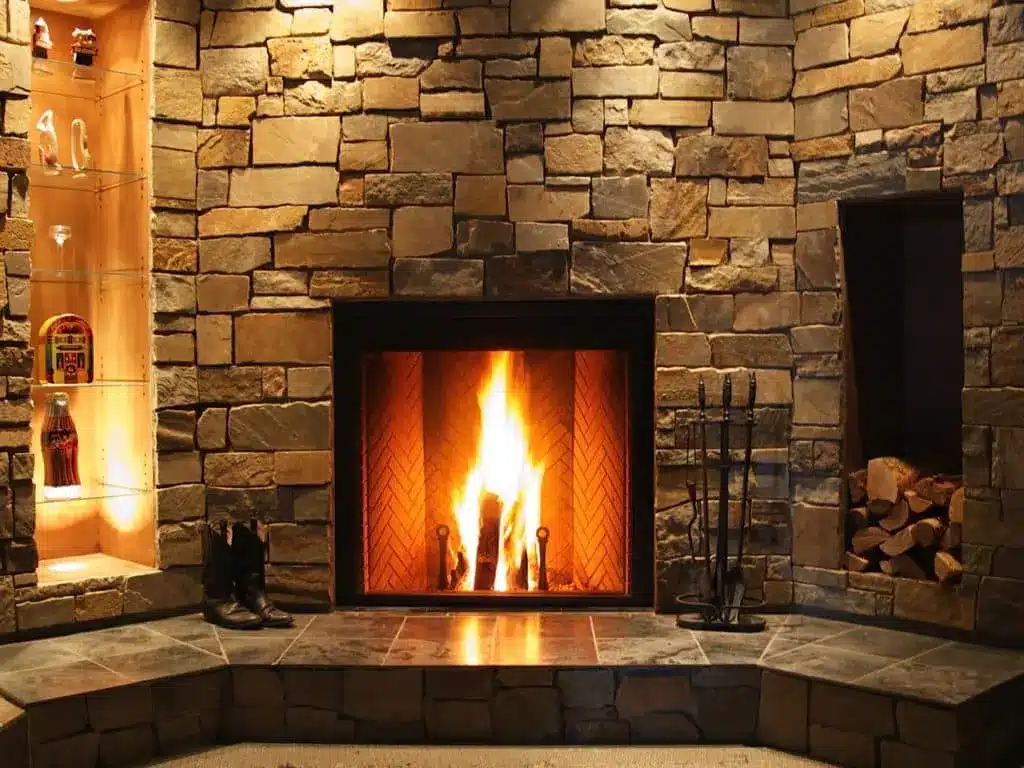
- Fieldstone: Irregular shapes and earth tones that mimic the geology of Southern Ontario.
- Reclaimed Barn Board: Wood with a history, often sourced from local dismantling projects, adding instant character.
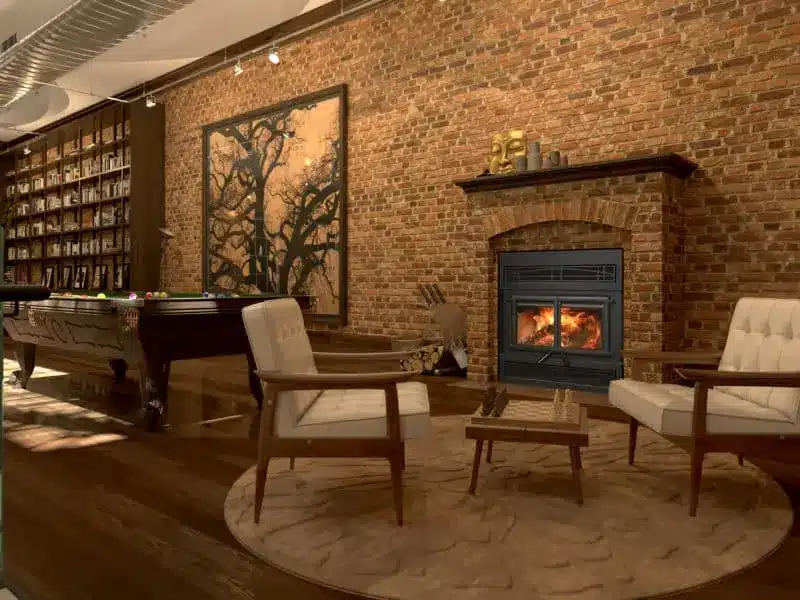
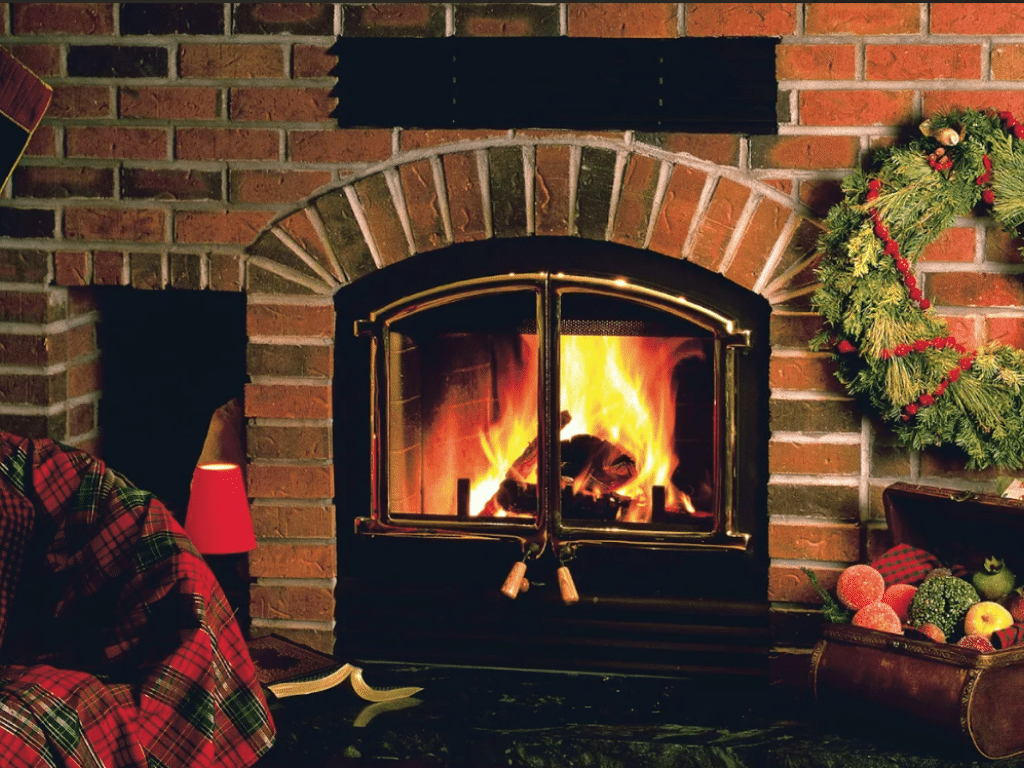
- Red Brick: The classic choice for a warm, traditional feel, often arranged in herringbone patterns.
- River Rock: Smooth, rounded stones that create a cottage-like, relaxed atmosphere.
- Rough-Hewn Mantels: Thick, solid pieces of timber with visible knots and grain.
- Wrought Iron: Accessories and screens in black iron add weight and historical context.
- Slate and Limestone: Natural split-face stone provides texture without being as bulky as boulders.
- Mortar Joints: Visible, sometimes messy mortar lines contribute to the “hand-built” aesthetic.
- The Modern Palette: Focuses on reflective, smooth, and man-made surfaces.
- Polished Concrete: Industrial, cool, and can be cast in various shades of grey or charcoal.
- Porcelain Tile: Large-format tiles that mimic marble or steel but offer heat resistance and sleek lines.
- Blackened Steel: Hot-rolled steel panels create a dramatic, moody, and ultra-contemporary focal point.
- Glass Media: Instead of logs, the fire bed is filled with crushed glass or geometric stones.
- Ledgestone: While stone, when cut into thin, stacked strips, it creates a linear look that bridges modern and rustic.
- Granite Slabs: Seamless, polished stone surrounds that offer a high-luxury finish.
- Lack of Mantel: Often the material goes floor-to-ceiling without a horizontal break.
- Hidden Hardware: Controls and vents are concealed to maintain unbroken surfaces.
3. The Visual of the Flame: Logs vs. Linear
Beyond the surround, the fire itself has a style. Technology has allowed us to manipulate how fire looks. Rustic fires seek to replicate the chaos and height of a wood fire, while modern fires often treat flame as a kinetic sculpture, controlled and stylized.
- Rustic Fire Visuals: The goal is realism and nostalgia.
- High-Definition Logs: Ceramic fiber logs molded from real oak or birch, complete with char marks.
- Ember Beds: Glowing “embers” at the base of the fire to mimic a dying wood fire.
- Yellow/Orange Flames: Burners tuned to produce a “dirty” rich yellow flame similar to burning wood.
- Vertical Flame Path: Flames that lick upward around the logs, creating height.
- Chaotic Movement: The fire moves unpredictably, mimicking the natural draft of an open chimney.
- Campfire Stacking: Logs arranged in a teepee or cross-stack style.
- Andirons and Grates: Decorative metal supports inside the firebox that add to the traditional look.
- Soot and Char: Some interiors have faux soot painted on to enhance the “lived-in” feel.
- Modern Fire Visuals: The goal is art and ambiance.
- Ribbon Burners: A single, continuous line of flame that dances uniformly across the width.
- Glass Media Beds: Crushed glass in blue, black, or clear that reflects the light for a glittering effect.
- Geometric Shapes: Cannonballs or river stones used instead of wood logs.
- Driftwood Sets: If wood is used, it is often stylized, bleached driftwood arranged sparingly.
- Interior Lighting: LED accent lighting under the media bed allows the fireplace to glow even without heat.
- Mirrored Liners: Black porcelain or mirrored interiors reflect the flames, making the fire look deeper and more abundant.
- Clean Edges: No visible metal louvers or grills; the glass goes right to the finishing material.
- Lower Flame Height: Often the flame is kept lower to prevent overheating the wall, focusing on the “dance” rather than the roar.
4. Space Management and Room Layout
How much space do you have in your Simcoe home? Rustic fireplaces tend to be “space invaders,” projecting into the room and demanding floor space for hearths. Modern fireplaces are “space savers,” often flush with the wall or capable of being installed in tight corners where traditional units wouldn’t fit.
- Rustic Spatial Demands:
- Footprint: Requires a non-combustible hearth extension on the floor (usually 16-18 inches).
- Projection: Often built out from the wall to accommodate masonry or chimney depth.
- Furniture Arrangement: Furniture must be pushed back, creating a large semi-circle around the hearth.
- Visual Weight: Can make a small room feel smaller due to the heavy materials.
- Chimney Breast: The bump-out for the chimney often dictates where cabinets or shelves can go.
- Ceiling Height: Needs vertical clearance to look proportional; can look squat in low rooms.
- Traffic Flow: The protruding hearth can be a tripping hazard or impede walkways in narrow rooms.
- Modern Spatial Efficiency:
- Zero Clearance: Can be framed right into a wall with minimal depth requirement.
- Flush Floor: No hearth extension is usually required, allowing flooring to run right up to the glass.
- Floating Designs: Can be wall-mounted off the floor, leaving space underneath for airflow or ease of cleaning.
- TV Placement: “Cool Wall” technology allows TVs to be mounted safely directly above the fireplace, saving wall space.
- Corner Units: Modern multi-sided (pier or corner) units can utilize awkward structural pillars.
- See-Through Options: Tunnel fireplaces connect two rooms (e.g., bedroom and bath) without doubling the footprint.
- Compact Models: Portrait-style modern units can fit in tiny spaces like kitchens or entryways.
5. Heating Functionality: Radiant vs. Convective
While style is paramount, heat is the purpose. Rustic units, particularly wood stoves or masonry fireplaces, typically rely on radiant heat—the feeling of the sun on your face. Modern gas or electric units often utilize convection—using fans to circulate warm air.
- Rustic/Radiant Heating:
- Thermal Mass: Stone and brick absorb heat and release it slowly long after the fire is out.
- Directional Warmth: You need to be near the fireplace to feel the intense heat.
- High Temperature: Surfaces can get very hot, which is great for warmth but a caution for kids.
- Zone Heating: Excellent for making one large “Great Room” very warm.
- Atmospheric Change: Tends to dry out the air more significantly.
- Slow Startup: Masonry takes time to heat up; wood stoves take time to build a coal bed.
- Power Outage Reliance: Wood units are the ultimate backup as they need no power to radiate heat.
- Modern/Convective Heating:
- Blower Systems: Built-in fans push heat to the far corners of the room.
- Thermostatic Control: Can maintain a specific temperature (e.g., 21°C) like a furnace.
- Heat Distribution Kits: Some modern units can duct heat to other rooms or even outdoors.
- Cool Touch Glass: Safety screens keep the outer glass safe for children and pets.
- Turndown Ratios: Modern gas valves allow you to lower the flame/heat without turning the fire off.
- Instant Gratification: Heat is immediate with the touch of a button.
- Summer Mode: Some electric modern units allow for flame effects with zero heat output.
6. Lifestyle and Maintenance
How much work do you want to do? The Rustic lifestyle often implies a “labour of love”—chopping wood, cleaning ash, and tending the flame. The Modern lifestyle implies convenience—automation, remote controls, and set-it-and-forget-it reliability.
- The Rustic Ritual (Wood/Traditional):
- Fuel Sourcing: Requires buying, stacking, and seasoning firewood.
- Daily Tending: Building the fire, adjusting dampers, and adding logs is an active process.
- Cleaning: Regular ash removal and glass cleaning (soot buildup) are required.
- Chimney Sweeping: Annual professional cleaning is non-negotiable for safety.
- Mess: Bark, bugs, and dirt will inevitably enter the house with the wood.
- Smell: The house will have the faint scent of woodsmoke (which many love).
- Physicality: Requires a certain level of physical ability to manage the fuel.
- The Modern Convenience (Gas/Electric):
- Remote Control: On/off, flame height, and fan speed controlled from the couch.
- Smart Home: Many new units can be controlled via smartphone apps or voice assistants.
- No Mess: No ash, no wood chips, no bugs.
- Consistent Fuel: Natural gas or propane is piped in; you never “run out.”
- Low Maintenance: An annual service call is usually all that is needed.
- Programmable: Set timers for the fire to wake you up or turn off automatically.
- Accessibility: Perfect for aging in place as no physical strength is required to operate.
7. Decor Flexibility and Seasonal Styling
A fireplace is a stage for your decor. Rustic fireplaces with large mantels offer a platform for seasonal expression. Modern fireplaces, with their minimalist ethos, often resist decoration, standing alone as the complete visual statement.
- Rustic Decorating:
- The Mantelpiece: The prime spot for stockings, garlands, family photos, and clocks.
- Hearth Decor: Space for a wood basket, antique tools, or floor cushions.
- Seasonal Shifts: Easy to transform the look for Christmas, Thanksgiving, or Halloween.
- Eclectic Mix: Forgiving of clutter; can handle a mix of photo frames and candles.
- Texture Layering: Allows for wool blankets, woven baskets, and heavy pottery nearby.
- Symmetry: often flanked by built-in bookshelves or windows, creating a traditional symmetrical look.
- Personalization: Tells the story of the family through the items displayed.
- Modern Styling:
- Minimalism: The beauty is in the clean lines; clutter ruins the effect.
- No Mantel: Often there is no shelf, so no place for stockings or knick-knacks.
- Permanent Aesthetic: The look is fixed; you can’t easily change the “vibe” with accessories.
- Surrounding Art: The wall above becomes the focus for a single large piece of art or a TV.
- Lighting Focus: The ambiance comes from the unit’s internal lighting rather than external decor.
- Asymmetry: often placed off-center or balanced by negative space rather than matching bookshelves.
- Cleanliness: Dust and clutter are very visible on sleek surfaces, requiring diligence.
8. Resale Value in the Simcoe Market
Simcoe is an evolving market. Buyers here value both character and modernization. The “Right” fireplace can increase property value, but the “Wrong” one can be a liability. Understanding the local demographic is crucial.
- Simcoe Market Trends:
- The “Move-up” Buyer: Families moving to larger homes in Simcoe want the “hearth” feel (Rustic/Transitional).
- The Downsizer/Retiree: A huge demographic in Norfolk; they want the warmth without the work (Modern Gas/Electric).
- Heritage Appeal: In older neighbourhoods, removing a rustic fireplace for a modern one can actually lower value by destroying character.
- Renovation ROI: Replacing a dated 1980s brass fireplace with either a modern linear or a clean traditional insert has high ROI.
- Basement Renovations: Modern electric or gas units are preferred in basements to save space and add value to rec rooms.
- Outdoor Living: Outdoor fireplaces (usually rustic stone) are a massive value-add in Simcoe’s large backyards.
- Energy Efficiency: Buyers ask about utility costs; high-efficiency modern inserts are a selling point.
9. The “Transitional” Compromise
You don’t always have to choose. The biggest trend in Simcoe right now is “Transitional”—blending rustic warmth with modern lines. This style captures the broadest audience and fits the widest variety of homes.
- Defining Transitional:
- Clean Stone: Using natural stone but with a square, dry-stack cut rather than round irregular shapes.
- Wood + Metal: A sleek black gas fireplace framed by a reclaimed barn-board mantel.
- Traditional Shape, Modern Fuel: A square firebox (traditional shape) with a log set, but with a clean face (no louvers).
- Shiplap Surrounds: The “Farmhouse Modern” look—white shiplap walls with a simple beam mantel.
- Neutral Colours: Greys, creams, and whites that fit modern palettes but use textured materials.
- Timelessness: Less likely to look “dated” in 10 years than ultra-modern or ultra-rustic designs.
- Versatility: Fits equally well in a renovated century home or a brand-new custom build.
10. Installation and Structural Realities
Finally, your dream design must meet structural reality. Some rustic designs require foundations that don’t exist in your home, while some modern designs require venting paths that might be blocked.
- Structural Considerations:
- Weight: A full masonry stone fireplace (Rustic) is incredibly heavy and may require reinforced floor joists or a concrete pad.
- Chimney Status: If you have an existing masonry chimney, a “retrofit” insert (Rustic or Transitional) is the most cost-effective.
- Venting Routes: Modern Direct Vent gas units can go out a side wall, allowing for fireplaces in bedrooms or basements where no chimney exists.
- Gas Line Access: Installing a gas fireplace requires running a line; consider the cost if your gas meter is on the other side of the house.
- Electrical Needs: Modern units need power for blowers and ignition; do you have an outlet nearby?
- Wall Depth: A linear modern fireplace might require building a false wall (framed bump-out) to house the unit, losing 12-24 inches of room depth.
- Clearances to Combustibles: Rustic wood stoves need significant distance from walls/furniture, whereas modern units have tighter clearances.
Frequently Asked Questions:
-
A1. Yes. Real estate data suggests that homes with functioning fireplaces are viewed as premium listings. They often sell faster and can command higher prices because they offer both aesthetic appeal and a backup heating source, which is highly valued in our climate.
Conclusion
Finding the right fireplace for your home in Simcoe is a journey of balancing the heart with the head. It is about reconciling the emotional pull of a crackling, rustic hearth with the sleek, practical allure of modern design. There is no universally “correct” choice; there is only the choice that resonates with your home’s architecture and your family’s rhythm of life. Whether you opt for the rugged charm of fieldstone and timber to honour Norfolk County’s rural heritage, or the sophisticated clean lines of a linear gas fire to embrace the future, the result should be the same: a gathering place that offers warmth, light, and a profound sense of home.
Let us help you find your flame.
At Hearthstone House of Fire, we understand the unique diverse housing styles of Simcoe and Norfolk County. From heritage restorations to cutting-edge modern installations, we guide you through every step of the design and installation process.
Contact Hearthstone House of Fire today:
- Name: Hearthstone House Of Fire
- Address: Hamilton, Ontario, Canada
- Phone: 905-772-0779
- Email: hearthstone@rogers.com
- Website: HearthstoneHouseOfFire.com